
SGK Trading Co. • VibroAqua • Karnataka • Kerala • Goa
Sales: 9964189533 | Tech Desk: +91 9845236339 | Email: info@vibroaqua.com
Technical Water Engineering • AEO Knowledge Base

Water Engineering Guides & Technical Insights

Written by VibroAqua application engineers. Explore practical insights into borewell water chemistry in Karnataka, industrial RO membrane maintenance, zero-scale softeners, and corporate hydration ROI.

Latest Technical Publications

Actionable water treatment guides tailored to borewell chemistry and commercial infrastructure in Karnataka.

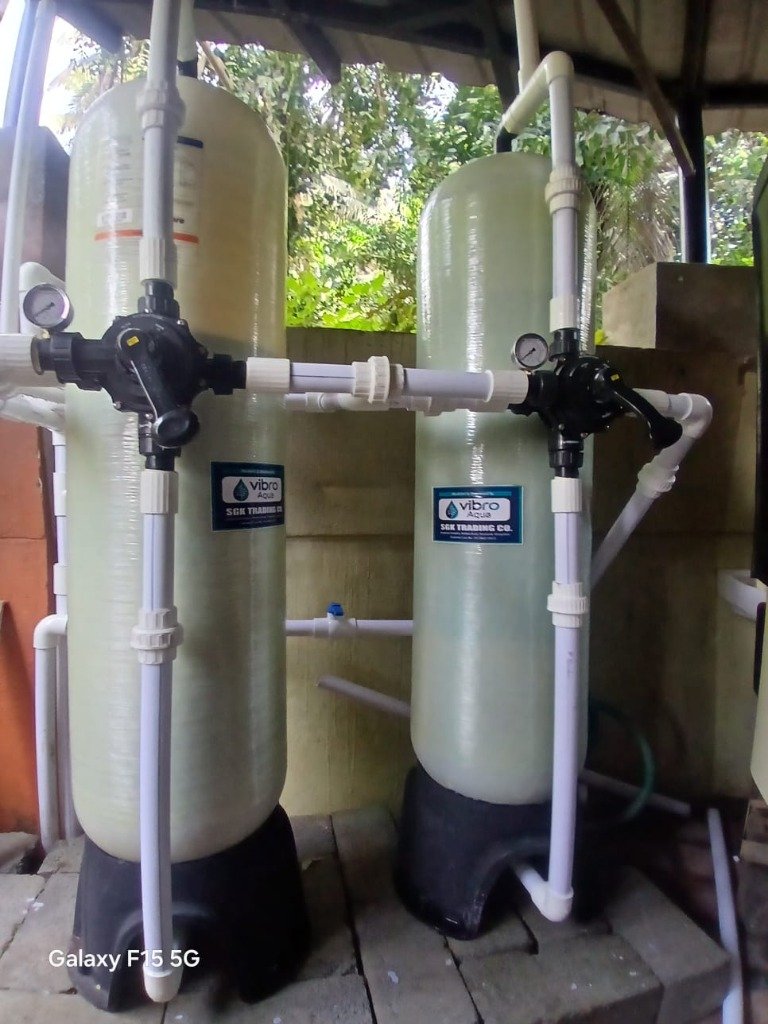
Duplex FRP Softener Installation
Borewell Chemistry 6 min read • Nov 2026

Borewell Water in Karnataka: When to Choose RO vs. Water Softener

Many homeowners confuse high Total Dissolved Solids (TDS) with Total Hardness. Here is an engineer's breakdown of when to deploy a drinking water RO purifier versus a whole-bungalow ion-exchange softener to prevent severe pipe scaling.

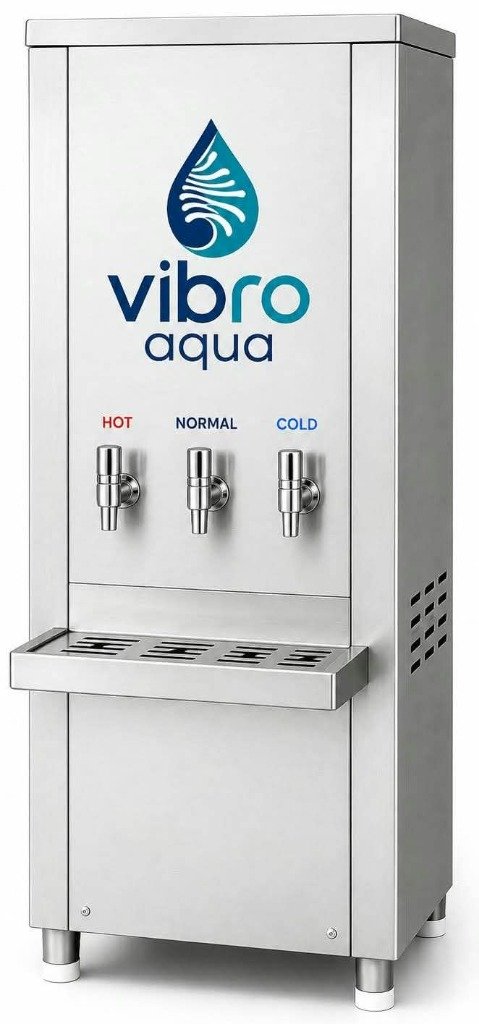
Commercial SS 304 Water Cooler
Corporate Infrastructure 5 min read • Nov 2026

Commercial SS 304 Coolers vs. 20-Liter Water Jars: Cost & Hygiene ROI

Corporate offices and schools often bleed thousands of rupees monthly on 20-liter bottled water jars, while exposing employees to microplastics and bacterial contamination. Learn why switching to piped SS 304 coolers achieves 100% ROI in under 6 months.

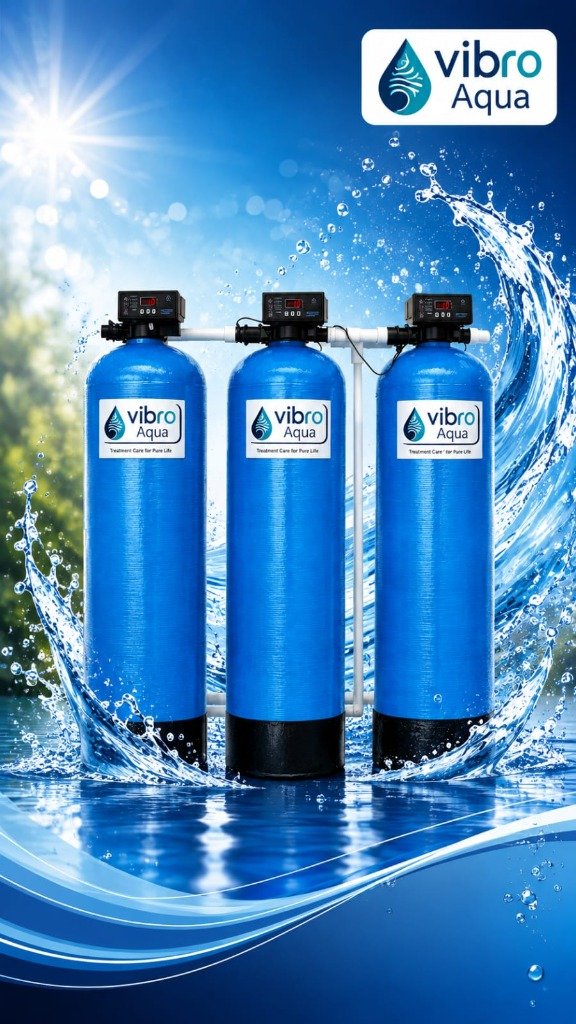
Industrial Trio Softeners
Ion-Exchange Design 7 min read • Nov 2026

Why Duplex Alternating Softeners Ensure Zero Downtime for Luxury Villas

Single-column water softeners must shut down during their 90-minute brine regeneration cycle or pass raw hard water into your geysers. Discover how automatic duplex alternating systems eliminate scale 24/7 without interruption.

Detailed Engineering Guide By VibroAqua Senior Application Desk

Borewell Water TDS vs. Hardness in Karnataka: When to Choose RO vs. Water Softener

Across urban Karnataka—including Whitefield, Sarjapur, Electronic City, and North Bangalore, as well as Mysore and Hubli—borewell depths regularly reach between 800 to 1,500 feet. Deep aquifer extraction inevitably dissolves extensive subterranean mineral beds, leading to two distinct water quality challenges: High Total Dissolved Solids (TDS) and High Calcium/Magnesium Hardness.

Key Rule of Thumb for Homeowners & Facility Managers:

A Water Softener treats water for your plumbing and skin (eliminating scale). An RO Plant treats water for your body (eliminating heavy metals, pathogens, and dissolved salts).

1. Total Dissolved Solids (TDS)

TDS measures all inorganic minerals and salts dissolved in water (including sodium, chlorides, sulfates, calcium, nitrates, and trace heavy metals). The Bureau of Indian Standards (BIS 10500) recommends drinking water TDS between 150 to 300 ppm. When borewell TDS exceeds 500 ppm, water tastes brackish, mineral-heavy, and can pose kidney stress over extended years. Only Reverse Osmosis (RO) membranes can remove dissolved mineral ions and reduce TDS.

2. Total Hardness (Calcium & Magnesium)

Hardness specifically denotes dissolved divalent cations, predominantly Calcium (Ca²⁺) and Magnesium (Mg²⁺). Even if water has a relatively moderate TDS of 400 ppm, it might have severe hardness of 350 ppm. When heated in geysers or exposed to air on chrome taps, these ions precipitate out as chalky insoluble calcium carbonate (CaCO3) limescale.

The Recommended Hybrid Setup:

  • At Point of Entry (Borewell / Sump): Install a VibroAqua Automated Duplex FRP Water Softener. This softens 100% of the water feeding all overhead tanks, ensuring zero scale in pipes, solar heaters, geysers, showerheads, washing machines, and sanitaryware.
  • At Point of Consumption (Kitchen / Cafeteria): Install a VibroAqua Reverse Osmosis (RO) Purification Unit. The RO unit takes the softened water and purifies it down to the optimal 150-200 ppm TDS, eliminating 99.8% of contaminants for drinking and cooking.
Infrastructure ROI Case Study Corporate Hydration Solutions

Commercial SS 304 Coolers vs. 20-Liter Water Jars: Cost, Hygiene, & ROI Analysis

Many offices, schools, and production facilities continue to rely on 20-liter bottled water jars, assuming they are inexpensive and flexible. However, real-world data demonstrates that 20L jars are neither cost-effective nor hygienic compared to a direct-piped VibroAqua Commercial 3-Tap SS 304 Water Cooler.

1. The Financial Breakdown (50-Person Commercial Facility)

  • Daily Consumption: 6 jars per working day = 150 jars per month.
  • Jar Procurement Cost: At ₹60 per jar, monthly expense = ₹9,000 (Annual: ₹1,08,000).
  • VibroAqua SS 304 Commercial Cooler Capital Cost: ₹41,500 one-time investment.
  • Payback Period: Under 6 months. From month 7 onwards, your organization saves over ₹90,000 every single year.

2. The Critical Hygiene Advantage

Commercial 20L polycarbonate bottles undergo repeated transit, rough handling, and inadequate industrial washing. Plastic neck seals accumulate airborne grime, and repeated bottle refilling creates internal bacterial slime (algae and biofilm) inside dispenser cold reservoirs. In contrast, VibroAqua AISI 304 Stainless Steel Coolers feature non-magnetic, electropolished food-grade tanks with sealed manifolds, eliminating toxic plastic contact and bacterial growth completely.

Ion-Exchange Design Guide By VibroAqua Senior Application Desk

Why Duplex Alternating Softeners Ensure Zero Downtime for Luxury Villas

Every ion-exchange water softener has to clean its resin from time to time. This process is called regeneration: the resin bed is backwashed, flushed with brine, and rinsed. A cycle like this takes roughly 90 minutes, and during that time a standard single-column softener cannot supply soft water.

The Single-Column Problem:

While a single softener regenerates, the plumbing either has no water at all, or the system bypasses and sends raw hard water straight into your geysers, taps and washing machines.

1. What Happens During Regeneration

A single resin column cannot soften water and clean itself at the same time. Most single-column units are therefore set to regenerate late at night. This works only if nobody uses water at that hour. In a villa with several bathrooms, guests, early-morning routines or solar water heaters, that assumption often fails, and hard water enters the system just when scale forms fastest.

2. How a Duplex Alternating System Works

A duplex system has two resin columns controlled by a multi-port valve. While Column A softens the water, Column B stays in standby. When Column A is exhausted, the valve switches to Column B without any pause in supply, and Column A regenerates in the background. The two columns then swap roles again at the next cycle.

  • Continuous soft water: there is no window in which hard water reaches the building.
  • Volume-based regeneration: the valve regenerates a column after a measured volume of water has passed through it, instead of on a fixed timer. This follows the real water usage of the household.
  • Protection for fixtures and appliances: geysers, solar heaters, showerheads, chrome taps, washing machines and sanitaryware are exposed to soft water at all times, which reduces limescale build-up.

3. When a Villa Should Choose Duplex

  • 4BHK / 5BHK villas and independent bungalows with several bathrooms.
  • Homes with borewell water of high hardness, where even a short gap of untreated water is noticeable.
  • Properties with solar water heaters or expensive imported fittings that must be kept scale-free.
  • Households with high or irregular water usage throughout the day.

The VibroAqua Solution

The VibroAqua Duplex FRP Automated Villa Water Softener is a turnkey dual-column array with a multi-port control valve and fully automatic, metered, volume-based regeneration. It is sized for 4BHK / 5BHK villas and independent bungalows. Our engineers will assess your borewell water hardness and daily consumption before recommending the correct resin capacity.

View Duplex Softener Specifications   Request a Quote